The “reality” of the “virtual” tour

Never once did I miss “Knight Rider”. The idea of a car that could talk, make decisions, and assist its owner felt futuristic, incredible, and almost magical. Today, self-driving cars are being tested and voice assistants are a reality. Meanwhile, KITT is probably enjoying a well‑deserved retirement somewhere in a Florida warehouse.

KITT from Knight Rider

In 2017, Monapart helped organize AIC17, a real estate event where we selected three Spanish startups we believed would transform the industry. One of them was Floorfy, which was just getting started back then and is now the only real competitor to Matterport (its American nemesis).

Seven years later, virtual tours let us visit properties without leaving home and saving time, money, and headaches for agents, owners, and home seekers. But the potential of this tool keeps growing, now driven by artificial intelligence. A few weeks ago, I visited their offices in Barcelona, and that’s why in the Bonus Track I’ll share three lesser-known, but very relevant, Floorfy features.
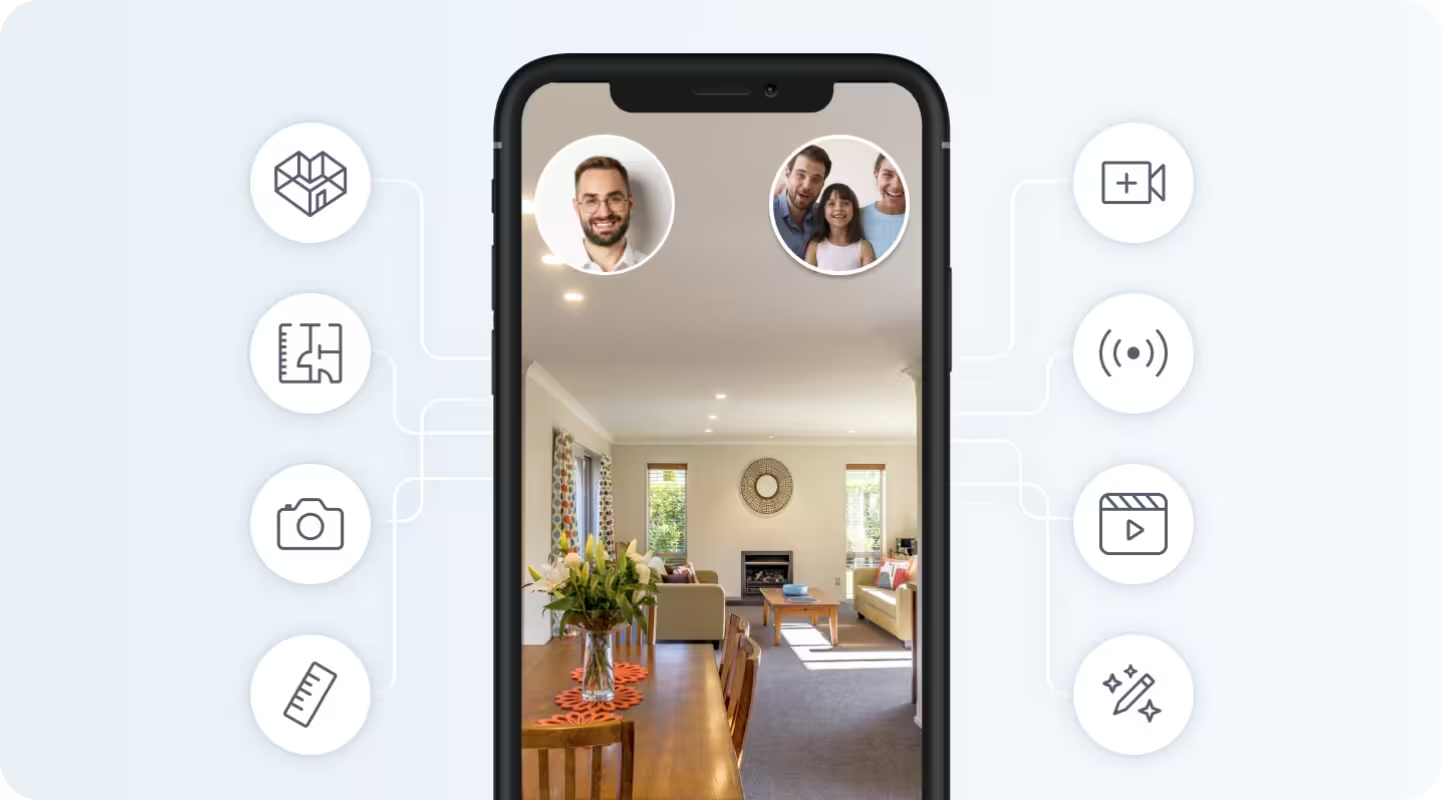

Bonus Track: Ctrl + F (Control Floorfy)

Seven years ago, virtual tours felt like science fiction, like “Knight Rider” when I was 7. Now, they’re a reality that lets you:
  1. Automatic floor plan generation 📐: Floorfy can generate property floor plans automatically from the processed virtual tour. More information for your clients, less time wasted.
  2. Automated multilingual descriptions 🌍: With one click, Floorfy generates complete descriptions in multiple languages using visual recognition of the different rooms.
  3. Video calls inside virtual tours 🎥: Showing a property remotely doesn’t just save unproductive travel, it brings you closer to clients anywhere in the world. Built‑in video calls let you answer questions in real time and improve the buyer experience.
Videocall mobile mockup with icon of the different products

Conclusion

Seven years later, Floorfy isn’t just a useful tool: it’s an industry standard. Its evolution confirms what we already sensed in 2017: technology applied to real estate transforms the way we work for the benefit of everyone.